
Reviewed · SILFRA SNORKELING TOURS
Dive the Divide: Silfra Fissure Scuba Tour | Meet at Thingvellir
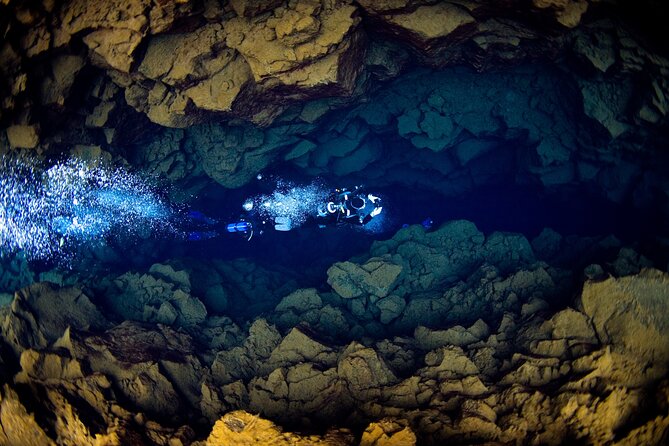
Silfra looks unreal, even in daylight. This 4-hour small-group Scuba tour from Thingvellir takes you under Iceland’s Silfra Fissure, with guided stops at Silfa Hall, Cathedral, and Lagoon, plus all the cold-water gear and a warm finish on shore.
I like two things a lot here. First, the small group size (maximum 3 participants) helps you get real attention during fit checks and safety briefings. Second, I love the way the route follows the continental plates gap you’re there to see, with water clarity often extending extremely far.
One drawback to plan for up front: it is physically demanding and paperwork strict. You’ll carry heavy equipment for about 400 meters, and you need current dry suit experience, plus the full-seal mask means glasses are not allowed under the seal.
In This Review
- Key highlights I’d plan around
- Arriving at Thingvellir, then getting briefed for Silfra rules
- The pre-water setup: ladder down, waist-deep acclimatizing, then checks
- Dry suit reality: carrying equipment, staying warm, and handling the mask issue
- Underwater route that hits the big Silfra sights in order
- The cold-water schedule: summer two sessions vs winter one session
- Why the small group feels like the real advantage
- Price and value: what your $296.41 really buys you
- Who should book this Silfra Fissure experience, and who shouldn’t
- Practical notes before you go: clothing, timing, and expectations
- Should you book the Silfra Fissure scuba tour at Thingvellir?
- FAQ
- Where is the meeting point for this Silfra experience?
- How long does the Silfra Fissure scuba tour last?
- Is pickup from Reykjavik included?
- What does the price include?
- What equipment is provided?
- Do I need dry suit certification to join?
- How many people are in the group?
- What should I wear or bring for warmth?
- Can I wear glasses under the mask?
- What changes in winter compared with summer?
Key highlights I’d plan around
- Max 3 participants means more time with your guide for gear checks and procedures.
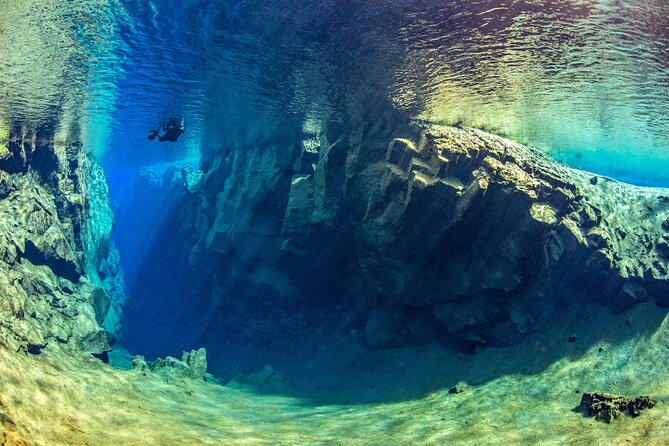
- Extreme visibility: reports of over 100 meters visibility, with electric blue tones through the fissure system.
- All specialized equipment included: dry suit, mask, fins, thermal undersuit, tanks, weights, and regulator.
- Summer vs winter timing: two roughly 30-minute underwater sessions in summer, one roughly 45-minute session in winter when conditions are colder.
- Real underwater landmarks: Silfra Deep Crack, then Silfa Hall, Cathedral (deepest point 22 meters), and Silfra Lagoon.
- Strict dry-suit requirements: you’ll need a card or logbook proof, and evidence you’ve used a dry suit recently.
More drifts between the continental plates:
- Silfra: Snorkeling Between Tectonic Plates – Meet on Location
★ 5.0 · 5,001 reviews - Silfra Snorkeling Between Continents Photos Included- Self Drive
★ 5.0 · 3,427 reviews - Silfra: Diving Between Tectonic Plates – Meet on Location
★ 5.0 · 2,139 reviews
Arriving at Thingvellir, then getting briefed for Silfra rules
You meet at the Silfra meeting point at Vallarvegur, 806, Iceland. The tour ends back at the same place, so think of this as an out-and-back half-day around the park.
Reykjavik pickup is not included, so you’ll need your own way to get to Thingvellir National Park. Also budget a small park parking fee (500 ISK) since the tour does not cover it.
Before you get anywhere near the water, you’ll get a thorough briefing. They explain park regulations, underwater procedures, and the signals you’ll use. Then you’ll check your gear and get comfortable with the dry suit, route, and equipment layout before you step in.
The pre-water setup: ladder down, waist-deep acclimatizing, then checks
The sequence is clear and practical. You descend a ladder to a submerged metal platform, then stand in waist-deep water to acclimatize and get used to the setup.
After that comes your required weight and safety checks. This matters because Silfra is cold and unforgiving, and small setup problems feel big under the surface. It’s also why a calm briefing and patient assistance are worth seeking out in a guide.
You’ll also hear a fun but useful detail: the water is clean and clear, and it’s perfectly safe to drink. You probably won’t taste-test the whole experience, but it’s a good reminder that the water you see is truly pristine.
Dry suit reality: carrying equipment, staying warm, and handling the mask issue
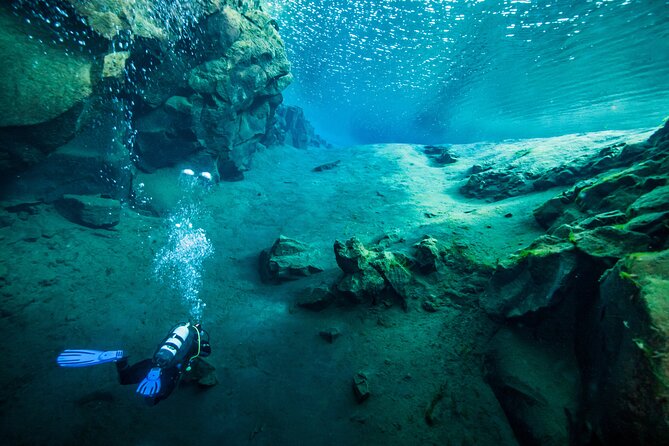
Silfra is challenging. You’ll carry heavy equipment for about 400 meters, and your maximum depth is limited to about 59 feet (18 meters). That combination of cold plus weight means you should be strong enough to move comfortably, not just technically certified.
You’ll wear warm undergarments, typically fleece or wool, and warm socks are required. I’d treat this like part of your planning at home, not an afterthought once you arrive in Iceland. Bring a change of clothing too, because no dry suit can be guaranteed to stay completely dry for everyone.
One practical gear constraint matters a lot: you cannot wear glasses underneath the mask seal. The setup is designed so nothing can interfere with the seal, and you’ll need to go without glasses, use contact lenses, or bring your own prescription goggles. If you rely on glasses day-to-day, confirm your plan before booking.
Underwater route that hits the big Silfra sights in order
The experience is built around moving through distinct underwater areas, not just following a line through open water. The route starts once you’re fully geared, comfortable with the fit, and ready to descend into the fissure system.
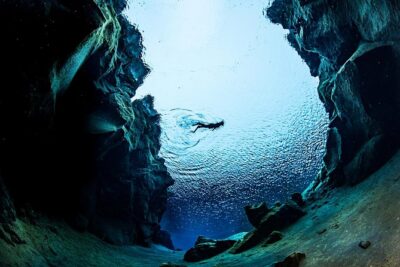
You’ll follow your guide through the electric blue water toward the Silfra Deep Crack. This is where you can see the gap between two continental plates, separated by only a short distance. When conditions are good, the clarity can be so strong that the whole space feels like it has sharper edges than normal water.
Then the route shifts. You glide through a narrow gap where the fissure walls squeeze close together, and as the space opens up you enter Silfa Hall. From there you go into Silfra Cathedral, a cavern-like chamber with plunging lava walls, and the deepest point on the itinerary is about 72 feet (22 meters).
Finally, you reach Silfra Lagoon, described as a brilliant-blue lake with seemingly endless visibility. That last stretch is often the payoff, because it’s where you see the “Silfra effect” at full intensity: light, scale, and blue clarity all at once.
More Golden Circle loops from Reykjavik:
- Reykjavik: Golden Circle Full-Day Tour with Kerid Crater★ 4.8 · 24,485 reviews
- From Reykjavik: Golden Circle, Kerid, & Secret Lagoon Tour★ 4.8 · 6,009 reviews
- Small-Group Golden Circle, Blue Lagoon with Ticket & Kerid Crater★ 5.0 · 5,631 reviews
- Golden Circle Classic Day Tour from Reykjavik★ 4.5 · 5,195 reviews
- Golden Circle with Kerid Volcanic Crater Day Tour from Reykjavik★ 4.5 · 2,826 reviews
The cold-water schedule: summer two sessions vs winter one session
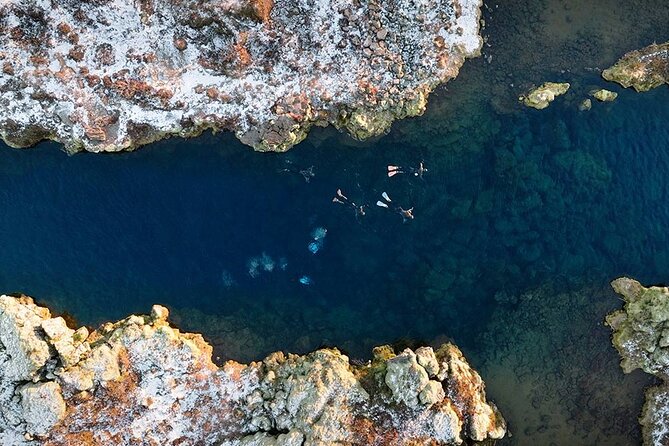
Plan on time underwater changing with conditions. In summer, you can make two sessions of about 30 minutes each. In winter, especially when water temperatures are below freezing, you do one session of around 45 minutes.
There’s also a winter safety note that matters for expectations: if the temperature falls below -0°C, the instructor may switch the plan to just one session for safety reasons. If you’re booking in the coldest stretch of the year, I’d mentally plan for a shorter underwater time first, then feel good if you get more.
Even with shorter timing, you’re still doing the hard parts: cold exposure, heavy gear handling, and careful procedures. So do not treat the clock as the only measure of effort.
Why the small group feels like the real advantage
This is not a “large group, follow the leader” experience. It’s limited to a maximum of 3 participants, and that changes how the guide can work with you. With fewer people, you get more direct help during setup and better attention when you need adjustments.
That matters most during dry suit prep and glove readiness. In one excellent account, guide Franceska was praised for warming gloves, helping people into their dry suits, and keeping a calm, supportive tone when conditions were brutal. The theme there is simple: competent comfort work is part of the experience, not extra.
I also like the way the operator frames safety priorities. When you’re in a cold, heavy-gear environment, your comfort level affects everything you do underwater. A guide who focuses on fit, control, and steady pacing makes the difference between stressed and focused.
Price and value: what your $296.41 really buys you
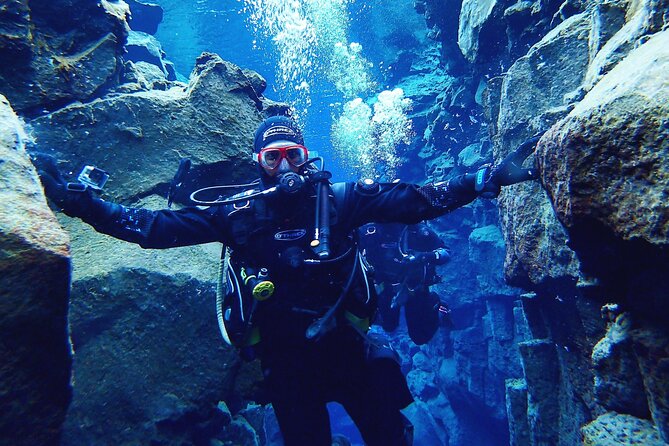
At $296.41 per person for about 4 hours, this is not a casual add-on. But it can feel reasonable once you see what’s included.
You’re paying for a guided underwater plan plus all specialized gear. That list is substantial: dry suit, thermal undersuit, mask, fins, tanks, weights, and regulator. You’re also getting a hot drink and cookies afterward, so you’re not freezing while you sort yourself out.
What’s not included is also important for budgeting. There’s no Reykjavik pickup, and it’s your job to handle your own food and drinks beyond the hot chocolate and cookies. You’ll also pay the park parking fee (500 ISK) in a private car scenario.
If you already own and regularly use a dry suit, you might feel this price more easily. But if you’d have to rent most equipment locally and still need specialized coaching, the all-in approach can feel like better value than piecing it together.
Who should book this Silfra Fissure experience, and who shouldn’t
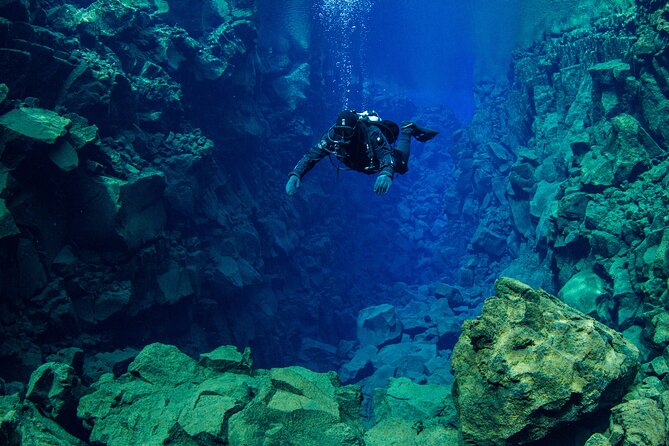
You should seriously consider it if you meet the stated requirements and can handle the physical side. You must be at least 18, have strong physical fitness, and be prepared to carry heavy equipment for about 400 meters.
More importantly, you need the right dry suit background. You’ll need to show proof of dry suit certification, either a certification card or logbook evidence showing at least 10 previous dry suit sessions signed by a dive professional. They also require you’ve used a dry suit within the last 2 years so your skills are current and you’ll enjoy the experience.
If you rely on glasses, confirm your workaround. The mask seal does not allow glasses underneath, so contacts, or prescription goggles, are your options based on the rules given.
If you are not comfortable with cold water, heavy gear, and disciplined safety checks, you’ll likely find Silfra frustrating rather than thrilling. In other words, this is for people who like structure, not for people who want a casual experiment.
Practical notes before you go: clothing, timing, and expectations
Wear warm undergarments, and make sure your warm socks plan is real, not optimistic. You’ll likely remove fins and other heavy equipment after the last underwater segment, then walk back to the parking lot. You’ll change into everyday clothes once you’re done, which is why the change of clothes is a must.
As for timing, the full experience is about 4 hours. That includes briefing, gear prep, the underwater schedule, walking back, and the warm-up snacks. If your day is packed with other activities in Iceland, give yourself buffer time around this one.
And yes, weather matters. This activity depends on good weather, and if it’s canceled for poor conditions you’ll be offered another date or a full refund. Even if you love the plan, stay flexible if the forecast goes sideways.
Should you book the Silfra Fissure scuba tour at Thingvellir?
I think this is a strong choice if you want a rare underwater setting and you already have the dry suit skills to enjoy it comfortably. The combination of all gear included, a tiny group, and a route through Silfa Hall, Cathedral, and Lagoon makes it more than just “being underwater.”
I’d book it if you’re the kind of diver who likes preparation, checklists, and a guide who focuses on fit and safety. Based on standout feedback about Franceska’s glove warming and calm support, good coaching can turn cold and technical into something you feel proud of.
I would not book it if you’re missing current dry suit experience, are uncomfortable carrying heavy gear, or need glasses that can’t be accommodated by contacts or prescription goggles. Silfra is gorgeous, but it is not a low-effort water activity.
If you match the requirements, this is one of those Iceland experiences where the blue clarity is only half the story. The other half is the disciplined, well-paced way you get there.
FAQ
Where is the meeting point for this Silfra experience?
You meet at the Silfra meeting point at Vallarvegur, 806, Iceland, and the activity ends back at the same meeting point.
How long does the Silfra Fissure scuba tour last?
The total experience is about 4 hours (approx.).
Is pickup from Reykjavik included?
No, pick up service from Reykjavik is not included.
What does the price include?
The price includes a guided scuba tour in Silfra with a certified PADI professional, a small group experience, and all specialized dive equipment. Hot chocolate and cookies are also included.
What equipment is provided?
You are provided specialized equipment including a dry suit, mask, fins, thermal undersuit, tanks, weights, and a regulator.
Do I need dry suit certification to join?
Yes. You must have previous dry suit diving experience. Your guide will need to see your dry suit certification card or a logbook showing at least 10 previous dry suit dives signed by a dive professional, and you also must have dived in a dry suit within the last 2 years.
How many people are in the group?
The maximum group size is 3 travelers.
What should I wear or bring for warmth?
Wear warm undergarments (fleece or wool) and warm socks are required. Bring a change of clothing because no dry suit can be guaranteed to be 100 percent dry.
Can I wear glasses under the mask?
No. The mask seal must not be blocked, so you cannot wear glasses underneath it. You will need to use contact lenses, go without glasses, or bring your own prescription goggles.
What changes in winter compared with summer?
In summer, you have the option of two sessions of about 30 minutes each. In winter, if water temperatures are below freezing, you will perform one session of about 45 minutes, and if the temperature falls below -0°C, the instructor may change the tour into just one session for safety reasons.
More Scuba Diving in Reykjavik
- Silfra: Diving Between Tectonic Plates and Pick Up from Reykjavik
★ 5.0 · 590 reviews - Dive the Divide: Silfra Fissure Scuba Tour | Reykjavik Pickup
★ 4.5 · 94 reviews - Thingvellir: Silfra Fissure Diving with Optional Pickup
★ 4.6 · 73 reviews - Silfra: Diving Between Tectonic Plates
★ 4.8 · 64 reviews
Just listed out of Reykjavik
Silfra Snorkeling Tours, compared.
Silfra: Snorkeling Between Tectonic Plates – Meet on Location
Read our review →
Silfra Snorkeling Between Continents Photos Included- Self Drive
Read our review →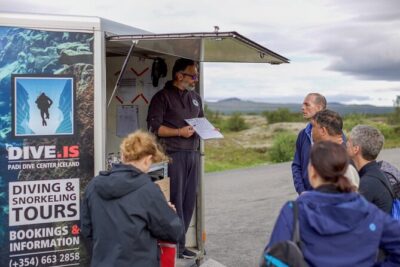
Silfra: Diving Between Tectonic Plates – Meet on Location
Read our review →
Silfra Fissure Snorkeling between Two Continents
Read our review →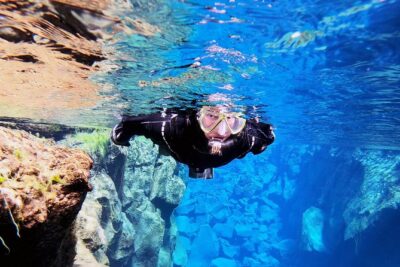
Silfra Drysuit Snorkeling with Free Photos – Meet on Location
Read our review →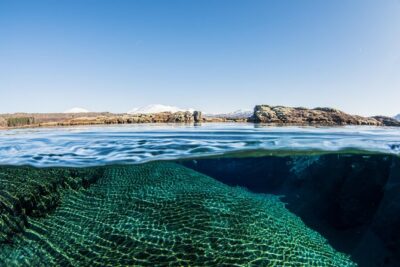
Silfra: Snorkeling Between Tectonic Plates Pick Up from Reykjavik
Read our review →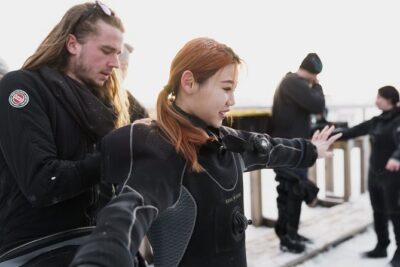
Silfra Drysuit Snorkeling Tour with Free Photos – From Reykjavik
Read our review →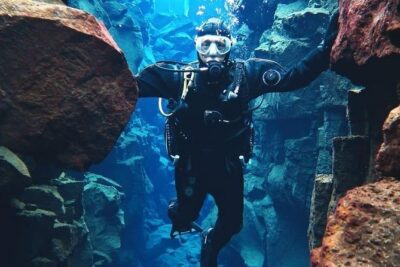
Silfra: Diving Between Tectonic Plates and Pick Up from Reykjavik
Read our review →More days of this kind out of Reykjavík