
Reviewed · SILFRA SNORKELING TOURS
Silfra Drysuit Snorkeling with Free Photos – Meet on Location
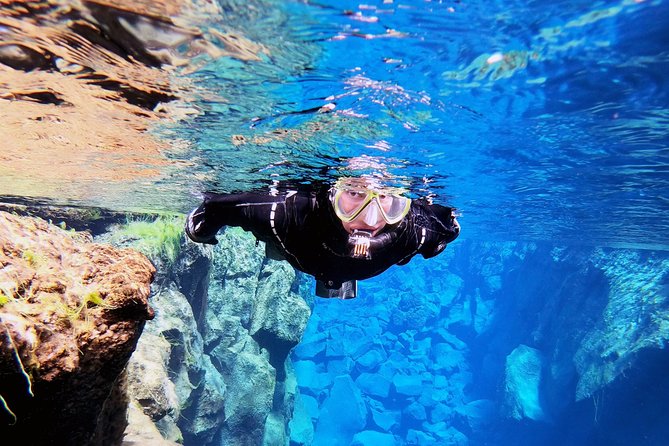
Silfra looks unreal, even in real life. This is snorkeling in Iceland’s UNESCO Thingvellir area, literally between drifting continental plates, with water so clear you can see far ahead. I love that the tour pairs a PADI-certified guide with a no-certification-required setup, plus the included drysuit gear makes the cold manageable. The main drawback to plan for is that the full process is a bit of a production, and the drysuit can feel tight at the neck and wrists.
The payoff is big: you get about 40 minutes in the fissure, often with guides who focus on safety first and photos second. Guides I’ve heard praised by name include Oli, Hugo, Anil, Kate, Klaudyna, and Oliver, and they all seem to share the same vibe, calm, thorough, and hands-on. Just be ready to swim, follow instructions closely, and accept that you will likely get some parts wet, especially hands.
In This Review
- Quick hits before you go into the cold
- Why Silfra at Thingvellir feels like a science class
- Drysuit vs wetsuit, and why that choice matters
- Meeting at Thingvellir: the “get ready” phase is part of the journey
- What actually happens in the water: 40 minutes in a tectonic rift
- Free photos and hot chocolate, the two best “memory insurance” items
- Timing, queues, and why early can feel better
- Safety rules and who should think twice
- Price and value: what $140 buys you in real terms
- What to pack and wear so you don’t suffer needlessly
- Which guides make the biggest difference
- Should you book Silfra drysuit snorkeling with free photos?
- FAQ
- How long will I be in the water?
- Do I need snorkeling or scuba certification?
- What is the minimum age and medical requirement?
- Do I need to be able to swim?
- Are glasses allowed?
- What if poor weather cancels the tour?
Quick hits before you go into the cold
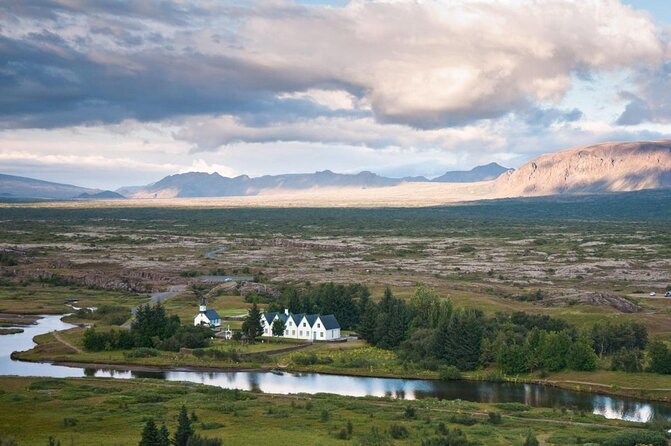
- Between two tectonic plates: Silfra forms as the plates drift apart, about 2 cm per year
- Freshwater with extreme visibility: you can see around 100 meters ahead
- Small groups for more attention: max 6 travelers, with one guide managing up to six
- Drysuit snorkeling plus free photos: equipment and underwater photos are included
- Cold is part of the experience: expect numb hands and feet, even with the drysuit
More drifts between the continental plates:
- Silfra: Snorkeling Between Tectonic Plates – Meet on Location
★ 5.0 · 5,001 reviews - Silfra Snorkeling Between Continents Photos Included- Self Drive
★ 5.0 · 3,427 reviews - Silfra: Diving Between Tectonic Plates – Meet on Location
★ 5.0 · 2,139 reviews
Why Silfra at Thingvellir feels like a science class
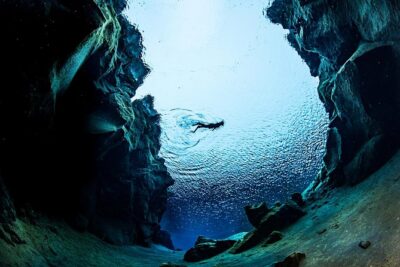
Thingvellir National Park is more than pretty scenery, it sits in a place where the Earth’s movement is on display. Silfra is a fissure created by the spreading of the tectonic plates. When you float in it, you are effectively snorkeling at the plate boundary, with the added bonus that the water is freshwater and eye-wateringly clear.
What you notice first is the visual calm. The water is so transparent that it feels like you’re flying above a model of the underwater world. I also like that the tour gives you context before you enter, so you’re not just wearing gear and hoping for the best. You’ll understand why the canyon walls look the way they do, and what you are actually looking at while you drift.
Drysuit vs wetsuit, and why that choice matters
This experience is built around keeping you warm, but it is not a one-size-fits-all setup. You’ll use snorkeling equipment and either a drysuit or, if you prefer, a wetsuit option may be available via another booking. The key point is that the drysuit tends to help most people feel comfortable enough to stay out longer in the water.
A few practical truths:
- Drysuits can feel tight around the neck and wrists, and you need to get used to that compression.
- Even in a drysuit, you can still get water on parts of you. Several reports say hands are definitely cold, and some people also felt head or mask water.
- A small leak can happen, and while it is uncommon, I’d treat this like nature is in charge. One negative experience described a faulty suit leaking freezing water near the back zipper, which is the worst possible scenario. Your best defense is to communicate immediately if anything feels off.
If you are prone to claustrophobia, the tour notes that it is not recommended. If that describes you, you may want to consider the wetsuit route, since it can feel less constricting than a drysuit. Also, if you’re a confident swimmer and you want more freedom of movement, a wetsuit might feel natural. If you want maximum warmth control, the drysuit is the default choice for most people.
Meeting at Thingvellir: the “get ready” phase is part of the journey
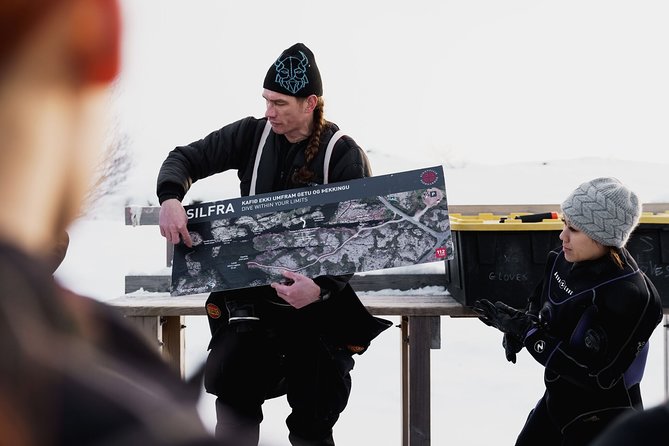
You meet at Thingvellir National Park, about 50 km from Reykjavik, at the starting point near Silfra Adventure Vikings (806 Thingvellir). The outing runs about 3 hours in total, but it’s not because you spend 3 hours in the water. Most of the time goes into gear, briefings, and getting everyone into the right shape for the conditions.
Expect a thorough briefing from your PADI-certified guide, covering safety procedures and how snorkeling works in Silfra. Then comes the gearing up, which is where the tour earns its good safety reputation. You change into base layers first, then get suited in the drysuit outdoors, with staff helping you get the bulkier, more awkward pieces on correctly.
What I like here is that they treat the suit like equipment, not a costume. There are collar and wrist seals, gloves, and a final check rhythm before you step toward the water. You also need to be able to swim and be comfortable in the water. This is not a float-and-chat experience.
What actually happens in the water: 40 minutes in a tectonic rift
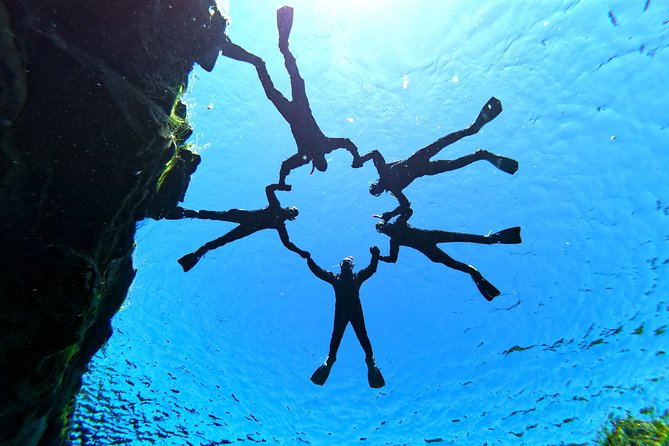
Once you’re geared and walking to the entry point, you’ll rinse or prep your mask and get final instructions. Then you enter the fissure with the guide leading the group. Silfra snorkel time is about 40 minutes, often reported in the mid range like 35 to 45 minutes.
The swim itself is usually described as peaceful, with that unreal visibility doing most of the work. You’ll see the canyon walls and the plate boundary from close range. There’s a reason people call the place magical in plain language, it looks like nothing else.
But here’s the honest part: swimming can feel more challenging than you expect. You’re in cold water, with bulky gear that limits movement. Even people who feel fine on land can get slower, then colder. Several guides are praised for staying patient and checking on everyone, including helping beginners feel secure. In at least one case, a guide named Piotr was singled out for rescuing a friend who panicked with the mask on, showing how seriously some guides handle stress and breathing.
Cold management is real. You will likely feel your hands and feet get numb. One review notes that after you adjust, you forget your face is in the water, while another reminds you that you might still feel cold by the end. Either way, the experience timing is short enough that you can set goals like warm up on land and focus on floating for the main viewing moments.
More shoots with an Iceland backdrop:
- #1 Northern Lights Tour In Iceland from Reykjavik with PRO photos★ 4.5 · 2,887 reviews
- Northern Lights Small-Group Tour with Hot Chocolate & Photos★ 4.5 · 2,068 reviews
- From Reykjavik: Northern Lights Guided Tour with Photos★ 4.3 · 718 reviews
- From Reykjavik: Northern Lights Tour with Hot Cocoa & Photos★ 4.7 · 695 reviews
- Silfra Drysuit Snorkeling Tour with Free Photos – From Reykjavik★ 5.0 · 624 reviews
Free photos and hot chocolate, the two best “memory insurance” items
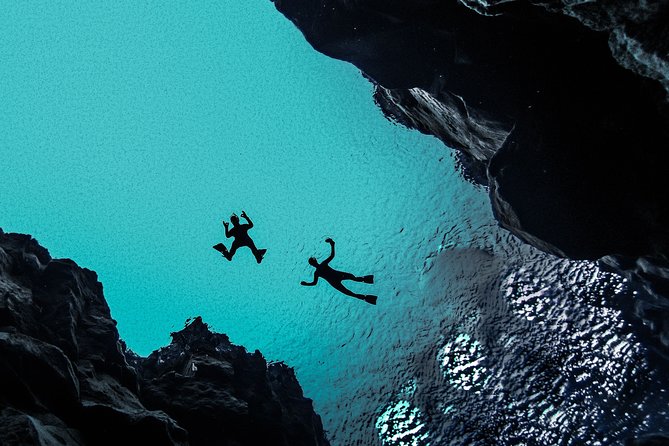
Your tour includes underwater photos. You’ll also be told how to access the included photos after you’re done. This is a huge value-add because Silfra photos are hard to get on your own, and you’re busy staying comfortable and following instructions.
In the feedback I reviewed, multiple guides were praised for taking great pictures, and some even used GoPro-style group photos. That matters because the conditions and setup make it easy to miss shots while you are adjusting fins, mask, or buoyancy.
Then you warm up. Hot chocolate is included, prepared by your guide for the day. It might sound small, but it’s the perfect endcap for a cold morning, and it gives everyone something to look forward to while they’re still suited up and waiting to get back.
Timing, queues, and why early can feel better
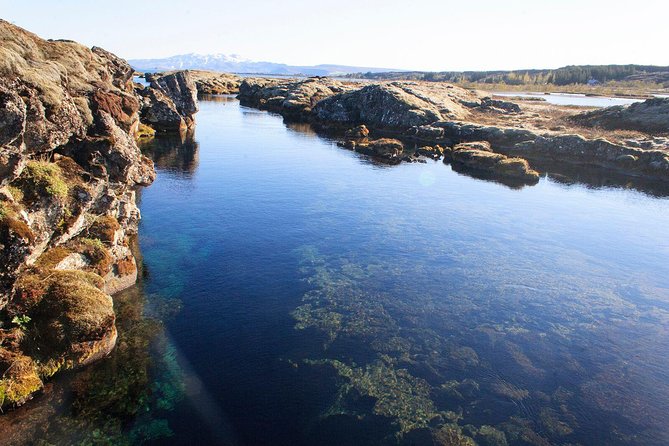
Silfra entry can get busy, because multiple operators run groups at the same general time window. The tour works with groups of six, and a guide assists one group at a time. Up to three groups can be present, so the site can feel like a well-run bottleneck.
Here’s the practical effect: you may have to wait briefly at the entry platform if other groups go in first. One review described a longer wait during peak conditions, even close to an hour, especially in winter. Another notes the experience can feel rushed when the day is crowded, with people not staying in the water as long as they hoped.
My advice is simple:
- If you’re booking, consider going earlier in the day when possible.
- Treat the in-water time as the priority, not the total tour length.
- Assume the overall tour time is approximate. Total duration is listed around 3 hours, while time in the water is about 40 minutes.
Safety rules and who should think twice
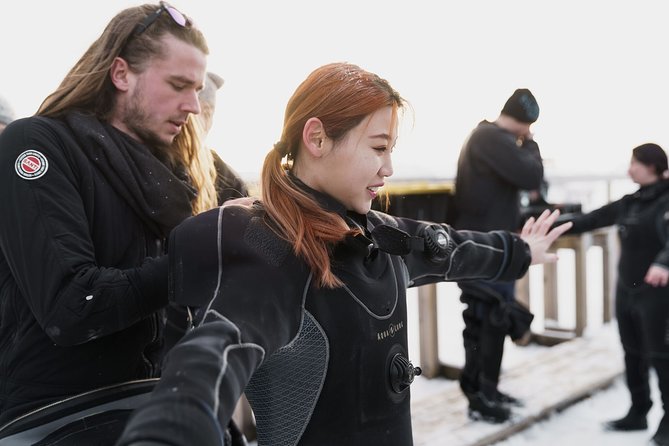
This is one of those adventures where the limits are there for a reason. The tour requires:
- You know how to swim and are comfortable in the water
- You can communicate in English
- You must fill out a medical form before participating
- Minimum age is 12
- Participants over 65 need physician approval
There are also height and weight requirements. You must be at least 150 cm and no more than 200 cm tall, and weigh between 50 kg and 120 kg. That’s not arbitrary. It’s how they ensure you can be fitted safely in suits and seals.
You should also pay attention to the glasses rule. Don’t wear glasses in the water. Bring contact lenses or your own prescription mask if you have one. Mask fit is part of staying calm, and calm is what keeps you warm.
If you have claustrophobia, the tour says it is not recommended. That is not an opinion, it’s risk management. Consider your comfort with constriction around the neck and the fully sealed suit design before you book.
Finally, always keep an eye on the suit condition. One low-star report described a leaky drysuit that made the situation unsafe in winter conditions. I’m not saying leaks are common, but I am saying you should report any issue instantly rather than toughing it out.
Price and value: what $140 buys you in real terms
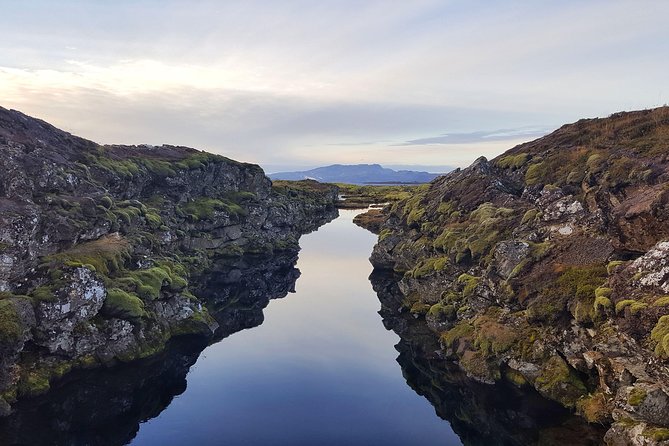
At $140 per person for roughly 3 hours, you are paying for more than just “being allowed in the water.” You get:
- A PADI-certified guide for safety and instruction
- Snorkeling equipment included
- Dry suit setup (and related thermal gear support)
- Underwater photos
- Hot chocolate
That bundle is the value story. The equipment alone would be expensive if you rented everything separately, and Silfra photos are the kind of souvenir you’d struggle to recreate yourself because of the cold and the difficulty of underwater composition.
Also, the small group size is part of the economics. Max 6 travelers means more individualized support compared with mass-tour setups. That is worth money on a safety-heavy outing.
So is it “worth it”? For most people who want a true plate-boundary experience with built-in warmth gear and photo help, yes. If you mainly want a calm stroll and zero swimming, you might find it more effort than you want for the cost.
What to pack and wear so you don’t suffer needlessly
The tour recommends you eat breakfast before you go. It’s also recommended that you bring a change of clothes, since there is a very small chance your drysuit could leak.
Wear a base layer that makes sense for cold insulation. The tour specifically recommends long thermal underwear and thick wool socks. Dressing in warm layers before you arrive is a big deal because once you’re outside, you’ll be in the suits and waiting for brief moments, not building warmth from scratch.
Other practical points that matter:
- Dress according to weather
- Avoid jeans and heels
- Make sure you’re not bringing glasses into the water
- If you have contacts or a prescription mask, plan those early
And mentally, go in expecting some cold numbness. One guide described hands and feet getting numb, and it is common enough that you should treat it like a normal part of the story.
Which guides make the biggest difference
Silfra is the main character, but guides are the difference between a stressful cold swim and a smooth one. The reviews and tour details point to guides who lead small groups, stay patient, and run safety checks without rushing.
Names that came up often include Oli, Hugo, Anil, Klaudyna, Kate, Arnold, Edgar, Wilmar, Niko, Nando, and Oliver. While you won’t always get to pick, the consistency of praise is clear: the best guides keep you calm before entry, check you during the snorkel, and help you with mask confidence and suit fit.
If you’re nervous, look for reviews that mention reassurance, patience, and hands-on support. That’s the style that turns an intimidating cold activity into something you can actually enjoy.
Should you book Silfra drysuit snorkeling with free photos?
I’d book it if you want:
- A once-in-a-lifetime setting at a UNESCO plate boundary spot
- Help with equipment, safety briefings, and getting into the water
- High-visibility underwater views that are hard to beat
- Included underwater photos so you can focus on the experience
I’d think twice if:
- You hate feeling constricted, since drysuits can feel tight at neck and wrists
- You struggle with cold even when prepared, because hands and feet can get numb
- You are a weak swimmer or not comfortable in water, since the tour requires swimming comfort
If you do book, do yourself a favor and go prepared. Layer up before you arrive, bring a change of clothes, eat breakfast, and listen carefully during the briefing. If you notice any suit issue, tell your guide immediately. With that mindset, this is one of the clearest, most memorable snorkeling experiences in Iceland you can book.
FAQ
How long will I be in the water?
The time in the water is approximately 40 minutes.
Do I need snorkeling or scuba certification?
No certification is required to participate. A PADI-certified guide leads the experience.
What is the minimum age and medical requirement?
The minimum age is 12. Participants over 65 need physician approval, and all participants must fill out a medical form before participating.
Do I need to be able to swim?
Yes. All participants must know how to swim and be comfortable in the water.
Are glasses allowed?
Glasses are not recommended. Bring contact lenses or your own prescription mask if you have one.
What if poor weather cancels the tour?
The experience requires good weather. If it is canceled due to poor weather, you will be offered a different date or a full refund.
Just listed out of Reykjavik

Silfra Snorkeling Tours, compared.
Silfra: Snorkeling Between Tectonic Plates – Meet on Location
Read our review →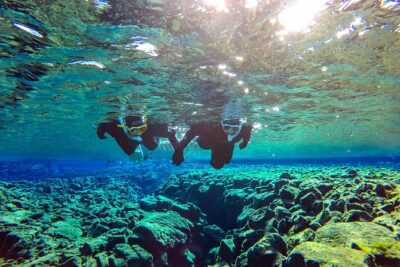
Silfra Snorkeling Between Continents Photos Included- Self Drive
Read our review →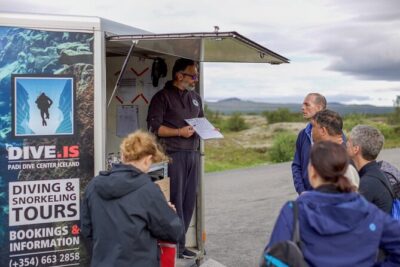
Silfra: Diving Between Tectonic Plates – Meet on Location
Read our review →
Silfra Fissure Snorkeling between Two Continents
Read our review →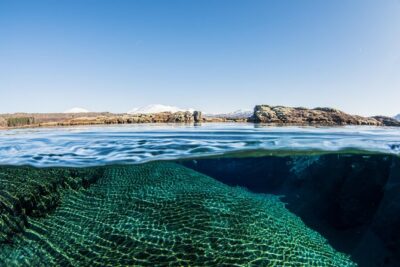
Silfra: Snorkeling Between Tectonic Plates Pick Up from Reykjavik
Read our review →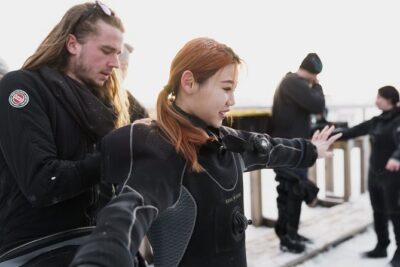
Silfra Drysuit Snorkeling Tour with Free Photos – From Reykjavik
Read our review →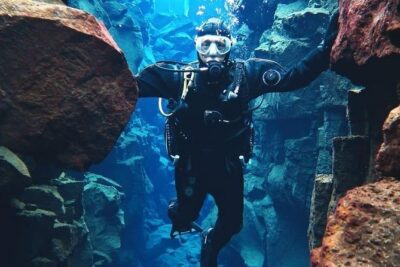
Silfra: Diving Between Tectonic Plates and Pick Up from Reykjavik
Read our review →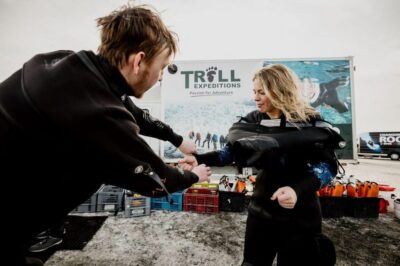
More days of this kind out of Reykjavík