
Reviewed · NORTHERN LIGHTS TOURS
8-Days Northern Lights Exploration Tour from Reykjavík
Iceland in winter rewards patience, and this tour teaches you how to use it. You start in Reykjavík, then crisscross the island for glaciers, lava fields, and geothermal stops while a Northern Lights Academy program helps you understand what you are actually watching.
What I like most is the mix of hands-on science with real-world sightseeing, and the way the route keeps serving the big winter hits without turning your days into a blur. You will also get winter and northern lights equipment like snow grippers and a flashlight, which matters when the streets and sidewalks go slick. One consideration: the price is steep, and with a non-refundable policy, you will want to be confident your dates and weather windows work for you.
In This Review
- Key things to know before you go
- Northern lights nights, with real science behind the waiting
- Reykjavik start and finish, plus easy access to the old-school city
- Iceland’s west and south energy: volcano craters, hot springs, and lava falls
- Kirkjufell and a glacier-fed cave, a good pair for photo lovers
- Golden Circle favorites, plus the geothermal bread and eggs moment
- Fridheimar: horses and geothermal growing, a different side of Iceland
- South coast day: Lava Centre, folk museum, black sand, and Skógafoss
- Vatnajökull region: icebergs on Jökulsárlón and the Diamond Beach effect
- Blue Lagoon day: included wellness time, plus a smart backup plan
- What the group size and equipment really mean for your comfort
- Price and value: what you get for $3,186.01 per person
- Who should book this northern lights exploration tour
- Should you book it?
- FAQ
- Is airport transfer included?
- What hotel and meals are included?
- Are northern lights activities included every night?
- Do I get a guided visit to Vatnshellir Cave?
- What winter gear is provided?
- Is Seljalandsfoss and Blue Lagoon admission included?
- How many people are on the tour?
Key things to know before you go
- Northern Lights Academy combines presentations, film, and night searches so you do not just wait in the dark
- Nightly aurora watching is built into the schedule, not left as a hope and a prayer
- Vatnshellir is guided with a tour into the cave, not just a quick look from the surface
- Geothermal tasting is real and practical with bread and eggs cooked in hot spring heat
- Small-group feel with a maximum of 40 people and an English-speaking guide or driver-guide
- Winter safety gear included like snow and northern lights shoe spikes plus a flashlight
Other nights out under the aurora:
- From Reykjavik: Northern Lights Bus Tour with Hot Cocoa
★ 4.3 · 13,947 reviews - Small-Group Premium Northern Lights Tour from Reykjavik
★ 4.4 · 2,977 reviews - #1 Northern Lights Tour In Iceland from Reykjavik with PRO photos
★ 4.5 · 2,887 reviews
Northern lights nights, with real science behind the waiting
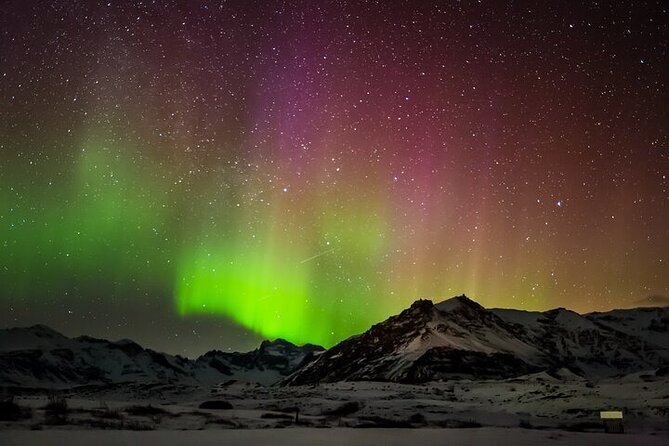
The hardest part of chasing the aurora is also the most personal part: you cannot control the weather, and you cannot control space weather. This tour helps you deal with that by teaching you what to look for before each night search. The Northern Lights Academy uses a mix of presentations and film, then sends you out to watch with the group.
You should expect nightly attempts rather than one single “maybe” outing. That changes the vibe. Instead of one long gamble early in the week, you get several chances to read the sky, learn how darkness changes perception, and spot the kind of cloud cover that can block light. The provided flashlight and footwear spikes also help you stay focused, because you are less worried about slipping and more able to keep watching.
If your main goal is the lights, this is the right kind of structure. If you want a completely laid-back itinerary with zero driving, you may feel the pace. It is built for winter, and winter means long days and early starts.
Reykjavik start and finish, plus easy access to the old-school city
Your trip begins and ends in Reykjavík, with hotel time on the first and last day. On day one, you can settle in or walk the city under winter daylight. Laugavegur is nearby, which is a convenient way to get oriented without needing a car or a tour just to stretch your legs.
For arrivals, you are met by the Flybus Plus shuttle service. The transfer is described as about 45 minutes to Reykjavík’s bus area, and you may be moved from the larger shuttle to a smaller coach depending on your accommodation instructions. This is useful if you are arriving in the dark or with jet lag, because you are not trying to navigate unfamiliar stops.
I like this approach because it keeps the “first hour” simple. You are not hunting for taxis after a flight, and you can sleep earlier knowing you are in the system.
Iceland’s west and south energy: volcano craters, hot springs, and lava falls
One of the smartest parts of this route is that it starts feeding you Iceland’s winter textures early. In western Iceland, you get the volcanic landscapes fast: mossy lava, crater rims, and geothermal power in action.
A highlight early on is Grabrok Crater. You can climb up toward the rim for views over a 3000-year-old crater area surrounded by a lava field. Even if you keep it short, the crater experience helps you understand Iceland’s “made by fire” character, without needing special gear.
Then you hit Deildartunguhver, described as Europe’s most powerful hot spring, producing about 180 liters per second, nearly boiling at 97°C. This is not a fancy museum stop. It is a working geothermal site, and you can feel how intense the heat is from the way the water behaves.
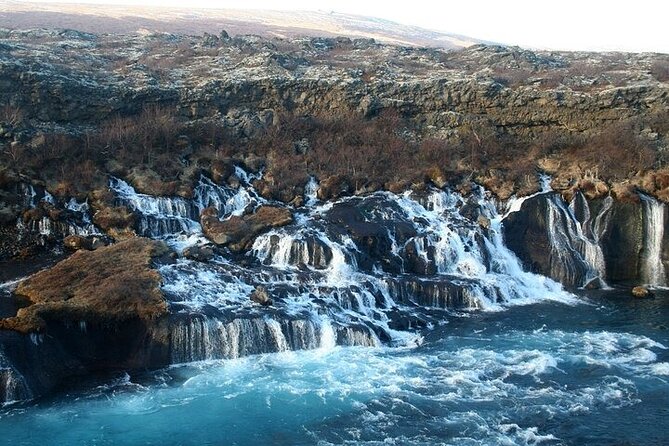
Next comes Hraunfossar and Barnafoss. These stops are a great reminder that Iceland’s geothermal story is not only steam and geysers. Hraunfossar is a broad, surprising waterfall spread under a birch-covered lava field. Barnafoss follows with rock-carved shapes and a tragic local tale, which makes it more memorable than another roadside waterfall photo.
Two practical tips for these day stops:
- Dress for cold and wet, because winter drizzle and spray are common.
- Expect short times at each location, so you will want to have your camera ready and your footwear sorted before you step out.
Kirkjufell and a glacier-fed cave, a good pair for photo lovers
Midweek, the itinerary turns toward iconic winter scenery and underground geology. One quick stop is Kirkjufell Mountain in the bay area. It is one of Iceland’s most photographed mountains, and even a short photo stop can work if you are willing to adjust your angle for low winter light. If you show up with patience, this can become one of those “I get why everyone shoots this” moments.
Then you go underground with Vatnshellir Cave, guided. You travel about 35 meters down and roughly 200 meters into a lava tube under glacier Snæfellsjökull. This is the kind of stop I personally love on winter tours because it gives your feet and eyes a break. Above ground, you are trudging through wind and cold. Underground, the mood changes to cool stone and calm.
What you should watch for is timing and comfort. Caves are often damp and chilly, even in winter. With the guide and a structured time slot, it stays easy to manage, but pack or wear layers you can move in.
If the forecast turns, these leave Reykjavik as well:
- Reykjavik: Golden Circle Full-Day Tour with Kerid Crater★ 4.8 · 24,485 reviews
- Reykjavik Food Walk – Local Foodie Adventure in Iceland★ 5.0 · 18,952 reviews
- Reykjavík: South Coast Waterfalls, Black Sand & Glacier Tour★ 4.8 · 11,030 reviews
- Reykjavík: Whale Watching and Marine Life Cruise★ 4.6 · 9,838 reviews
- Reykjavik: Sky Lagoon Entrance Pass With 7-Step Spa Ritual★ 4.8 · 6,166 reviews
Golden Circle favorites, plus the geothermal bread and eggs moment
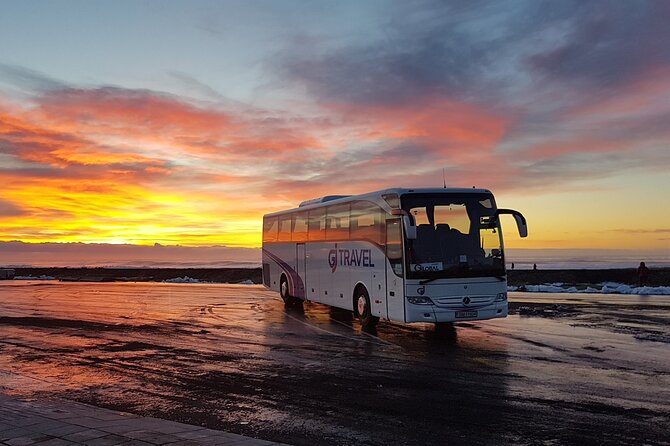
The section around Þingvellir National Park and the classic geothermal sites is where Iceland’s history and geology lock together. Þingvellir is a UNESCO World Heritage site, connected to the Alþingi, one of the oldest existing parliaments in the world. It is also a dramatic rift landscape right by Thingvallavatn. Even without a long hike, the setting makes the “why Iceland looks different” question easy to understand.
From there, Geysir brings you the living thermal show. The original geyser is dormant, but Strokkur erupts at intervals of about 5 to 10 minutes. That eruption rhythm is helpful for planning your photos and your attention. If you get the timing right, you will see it more than once in a comfortable window.
The most practical, delicious detail here is the hot spring tasting. You get freshly baked hot spring bread served with Icelandic butter, boiled eggs, and herring, cooked using geothermal heat. This is one of those stops that sounds simple until you realize it is a full sensory lesson: same forces powering the landscape also power a meal.
Then comes Gullfoss, the Golden Falls. It drops in a double cascade, and on sunny days you might see a rainbow in the spray. In winter, it can be loud, cold, and powerful. Go ready to look, not just to photograph.
Fridheimar: horses and geothermal growing, a different side of Iceland
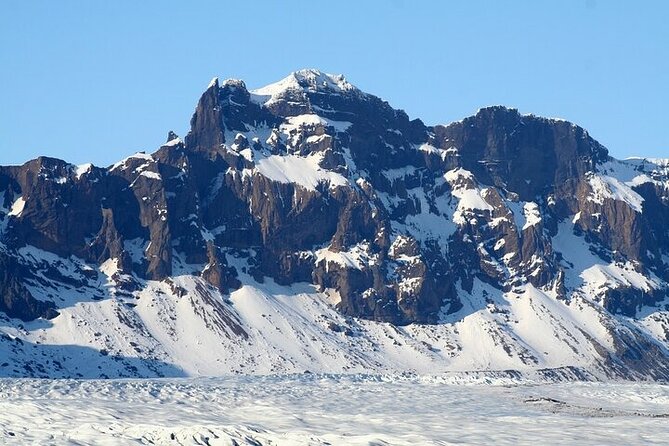
Instead of ending after waterfalls, this tour adds Fridheimar, where you learn about the Icelandic horse and visit a geothermal greenhouse. This part is valuable because it turns Iceland from “wild scenery” into “people making use of geothermal energy.” You see how heat becomes agriculture, and you learn why the Icelandic horse developed the way it did.
You only have about an hour here, so it is not a slow farm day. Still, it is long enough to ask questions, spot how the greenhouse is built, and connect the dots between horses, history, and energy in Icelandic life.
South coast day: Lava Centre, folk museum, black sand, and Skógafoss
As the route turns south, you keep switching modes: museum, coast, waterfall. This mix is good because it prevents cabin fever.
At the Lava Centre, you get a high-tech, interactive exhibition on geology and active volcanoes. It is a strong pairing with later volcano history content tied to Eyjafjallajökull. If you want context for why Iceland’s eruptions matter beyond Iceland, this is the place where the science is made understandable without being heavy.
Then you visit Skogar Museum, with farm and domestic artifacts from Iceland’s past and turf-built houses. It helps you remember that people have lived with these landscapes for centuries, adapting houses and daily life to a harsh climate.
The itinerary also includes multimedia at the Eyjafjallajökull Volcano Information Center. You learn about the famous 2010 eruption and how even a relatively small eruption disrupted air traffic across Europe for a week. That detail matters because it shows how Iceland connects to the rest of the world, even when you are just watching smoke on a distant ridge.
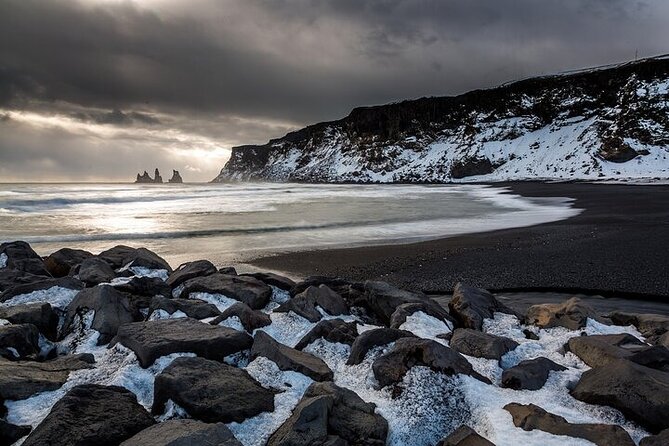
On the coast, Reynisfjara Black Sand Beach brings black lava sand, bird cliffs, caves, and columnar basalt formations. It is visually stunning, but use caution. This is a place where surf and waves can be strong, and rock formations look closer than they are. Keep to safe zones and do not treat it like a relaxed beach day.
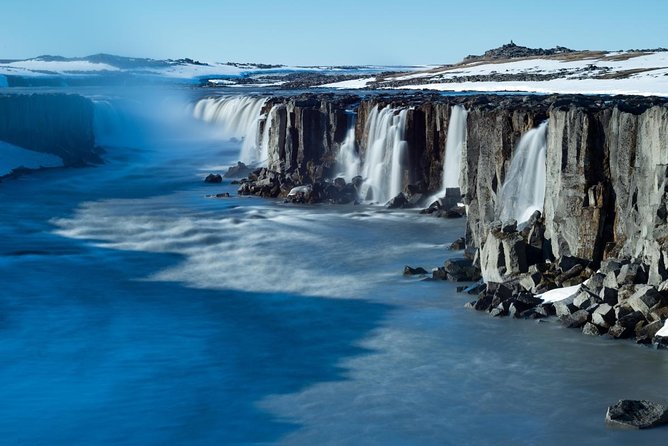
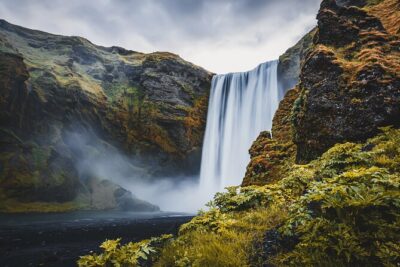
Finally, Skógafoss is a big payoff: a 60-meter-high waterfall near the village of Skógar. This is one of those stops that makes winter feel dramatic, because the falls turn everything steeper and sharper.
Vatnajökull region: icebergs on Jökulsárlón and the Diamond Beach effect
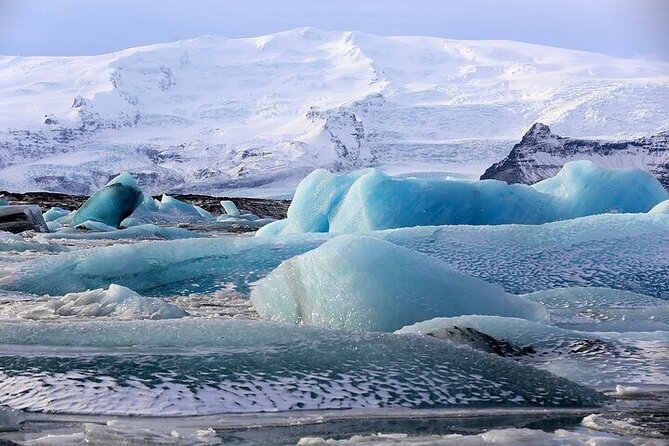
Jökulsárlón is one of the most famous stops for good reason. You visit Jökulsárlón, a glacial lagoon filled with floating icebergs. You have time to explore the site and you might see seals swimming in the arctic waters. Even if you do not spot seals, the iceberg shapes in winter light are worth the drive.
Across the road is Fellsfjara, also known as Diamond Beach, where larger icebergs wash up on black sand. You get a short but satisfying window to see ice stranded in place, which is often more visually surprising than just watching the lagoon from one angle.
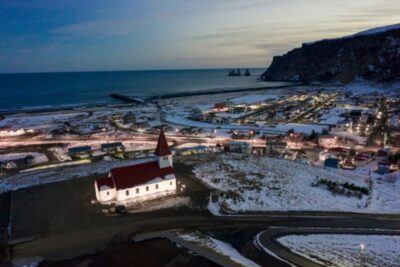
You also stop at Hof, for a photo by a tiny turf church built in 1883. It is the youngest turf church in Iceland, and the small scale makes it feel human and real. In a day full of huge nature, this kind of stop gives you a mental reset.
Then you enter Vatnajökull National Park, Europe’s largest national park, described with Iceland’s highest mountains, an alpine environment, and Europe’s largest glacier, Vatnajökull. You get about an hour here, so think of it as a broad introduction. You are not doing an all-day hike, but you are seeing why this region earns its place on every winter list.
Blue Lagoon day: included wellness time, plus a smart backup plan
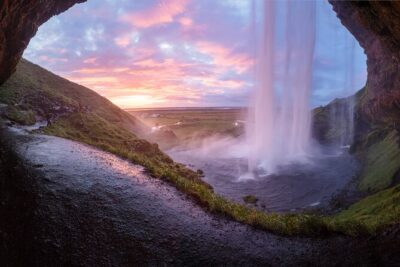
Near the end, you make your way to Vík, with a photo stop by black lava beaches and high bird cliffs with pounding waves. Then you visit Seljalandsfoss, a waterfall that drops from an overhanging lava cliff, and you can walk behind it. Do not plan for dry clothes. Winter rain plus waterfall spray means you should expect wet gear.
The wellness anchor is the Blue Lagoon, where admission and a towel are included, and you get about two hours. It is a popular stop, and that popularity makes sense: geothermal pools in a lava field are a weird, wonderful contrast.
One important practical note from the experience pattern: if the Blue Lagoon closes due to volcanic activity, operators may switch you to Sky Lagoon instead. This is exactly the sort of uncertainty you cannot solve alone when Iceland weather and infrastructure are involved, so it is reassuring when the tour has a replacement option ready.
If you love hot springs and you want a structured soak time, this is a strong finale.
What the group size and equipment really mean for your comfort
This tour runs with a maximum of 40 people, and you travel in an air-conditioned vehicle. Those details sound boring until you think about winter driving. Smaller groups tend to keep the experience more orderly, and fewer people means less chaos at stops where you need to line up, use restrooms, and move carefully in icy conditions.
The included equipment matters too:
- Snow and northern lights shoe spikes help you walk safely on slick surfaces
- A flashlight helps during night searches so you are not fumbling for light
- The guide-led format and included entrances keep you from losing time at ticket lines or information desks
WiFi on board is also handy for checking basic forecasts, but remember, forecasts do not guarantee anything. The tour’s whole approach is about structured nights plus education, not blind reliance on apps.
Price and value: what you get for $3,186.01 per person
At $3,186.01 per person, this is not a budget tour. You are paying for several high-cost elements stacked together: seven nights in comfort tourist-class hotels with breakfast, guided experiences in multiple locations, multiple included admissions, and the specialized Northern Lights Academy programming. Add in the equipment provided for winter conditions, plus the escorted bus portion across long distances, and the price starts to look less random and more like a bundle of logistics you would otherwise need to arrange yourself.
Where the value really shows is how much is included:
- Guided Vatnshellir cave
- Thermal spring tasting with hot spring bread and eggs
- Eyjafjallajökull Volcano Information Center multimedia
- Northern Lights Academy with night searches
- Included entrance at key stops like Thingvellir, Fridheimar, Lava Centre, Skogar Museum, Seljalandsfoss, and Blue Lagoon
If you were booking all of that independently in winter, you would likely spend a lot of money on tickets, transport, and guided segments anyway, and you would still be left to manage aurora timing yourself. Here, the schedule does that heavy lifting.
Who should book this northern lights exploration tour
This tour fits best if you:
- Want an aurora-focused trip but do not want to rely only on luck
- Like having your days planned with short visits to many major sites
- Are comfortable with winter driving and cold outdoors, with a few indoor and guided breaks
- Prefer a small group format rather than a chaotic free-for-all
It may feel like too much if you want long free afternoons, slow-paced walking, or minimal travel time. The schedule is packed, but it is packed in a way that keeps switching scenery types, which helps.
Should you book it?
If your top priority is the northern lights plus a big Iceland winter sampler that includes guided science and geothermal experiences, I would book this type of tour with confidence. The Northern Lights Academy structure and repeated night searches are the big reason. Then you layer in real included value, like Vatnshellir guidance, hot spring tasting, and stops such as Þingvellir, Geysir, Gullfoss, Jökulsárlón, and a geothermal soak at Blue Lagoon.
I would hesitate only if the price feels too high for your style of travel, or if you are not comfortable with a schedule that mixes early starts, frequent stop-and-go moments, and winter road conditions. If you are good with that trade, this is a strong way to spend eight winter days seeing why Iceland looks and feels unlike anywhere else.
FAQ
Is airport transfer included?
Yes. Arrival and departure airport transfer are included with the FLYBUS Plus shuttle, and the transfer is described as about 45 minutes to the BSI bus station in Reykjavík.
What hotel and meals are included?
You get 7 nights in comfort tourist-class hotels with breakfast included for 7 mornings. Additional meals and drinks are not included.
Are northern lights activities included every night?
Northern lights searches are part of the Northern Lights Academy program, which combines presentations, film, and night searching.
Do I get a guided visit to Vatnshellir Cave?
Yes. The tour includes a guided visit into Vatnshellir cave, including the time underground.
What winter gear is provided?
The tour includes the use of winter and northern lights equipment, specifically snow and northern lights shoe spikes and a flashlight.
Is Seljalandsfoss and Blue Lagoon admission included?
Seljalandsfoss admission is included, and Blue Lagoon includes admission plus a towel.
How many people are on the tour?
The tour has a maximum of 40 travelers. The itinerary is fully escorted for the bus portion with an English-speaking guide or driver-guide.
Just listed out of Reykjavik
Northern Lights Tours, compared.
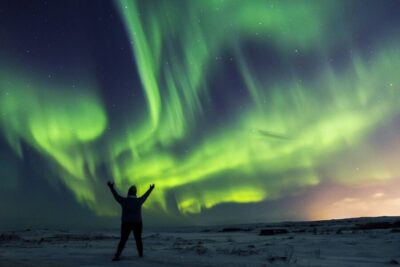
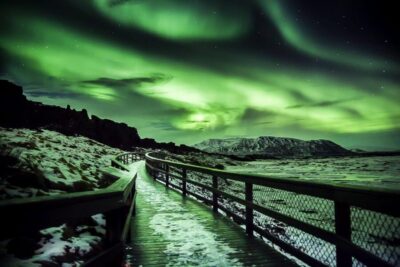
Small-Group Premium Northern Lights Tour from Reykjavik
Read our review →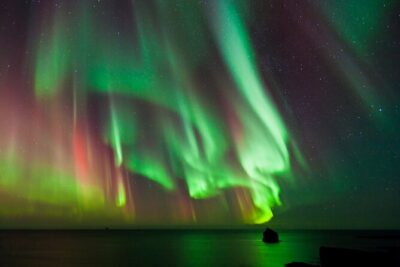
#1 Northern Lights Tour In Iceland from Reykjavik with PRO photos
Read our review →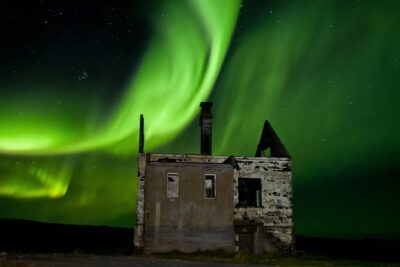
Northern Lights Small-Group Tour with Hot Chocolate & Photos
Read our review →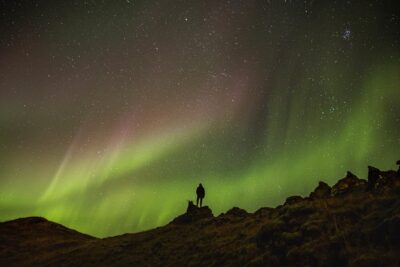
Northern Lights Bus Tour from Reykjavik with Hot Chocolate
Read our review →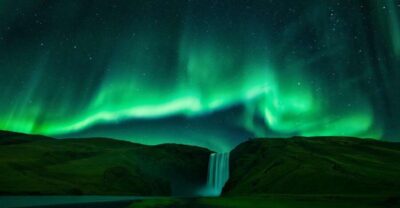
More days of this kind out of Reykjavík